Embedded Files
IQ2 Why am I me?
IQ2 Why am I me?
3. Genetic Problems
12. Outline Mendel’s monohybrid experiments and the discovery of dominant/recessive traits (time permitting/ extension).
13. Explain the process of dominant/recessive inheritance.
14. Solve problems on inheritance using Punnet squares.
15. Use the terms genotype, phenotype, allele, dominant, recessive.

2.0 Inheritance vs Environment
2.0 Inheritance vs Environment
Genetic and Non-genetic Inheritance
Some characteristics are from non-genetic inheritance.
What are some examples of this?
Our genes control many of the characteristics of organisms that we see.
What are some examples of this?
Some characteristics are controlled by a number of genes such as our height, eye, hair and skin colour. This can result in a wide range of variation in these factors.
To complicate things, some characteristics can be influenced by both genetics and non-genetic factors
What are some examples of this?
Genes and Environmental Factors
Besides genes determining characteristics of an organism, which we will look into next, the environment can play a strong role.
The growth of a plant can be affected by amount of water, temperature and type of soil. Any variation in these factors can result in a very different plant in terms height, density of foliage and the frequency of flowers and fruits. This variation in plants is not due to genetics but the environment they are in.
The same can apply for animals, including humans. If a person is suffering from malnutrition and disease, their growth can be significantly stunted, their immunity low and the mental development limited. Environmental variation for humans is not restricted to nutrition but also their education, climate (compare typical body shapes of those in hot dry climates to those in extreme cold environments) and exposure to chemicals and other things such as UV light.
Questions
Questions
a) What are some environmental factors that could affect the characteristics of humans?
b) During which part of a human’s life would these environmental factors have most influence?
c) The blue flowers pictured below were from an hydrangea plant grown in acidic soil. The pink flowers were produced from the same species of plant grown in basic soil. What other environmental factors might affect the features of a plant?

REVIEW TASK 2.0.1
REVIEW TASK 2.0.1
From the diagram below and without referring to your previous exercise with this diagram:
write sentences of up to 13 words to describe the relationship of the various components to each other. You may choose to work from right to left, or left to right.
revisit your previous exercise on this and compare to see if/how your understanding has changed.

Task 2.0.2
Task 2.0.2
Read and process information Text page 4
Visit Scootle Genes L5917; PIN = LUKDO
Complete Genes and Environmental Factors sheet
2.1 How are genes expressed?
2.1 How are genes expressed?
2.1A. Genes and Traits
2.1A. Genes and Traits
It's often easy for us to understand the role that the environment plays in determining our characteristics, but the role of our genes is more complex. Many of our characteristics are pre-determined by our genetic code.
Meiosis produces half-cells that combine to form a new individual. The rearrangements of chromosomes during meiosis allow for genetic variety.
But what does genetic variety mean? How does it happen?
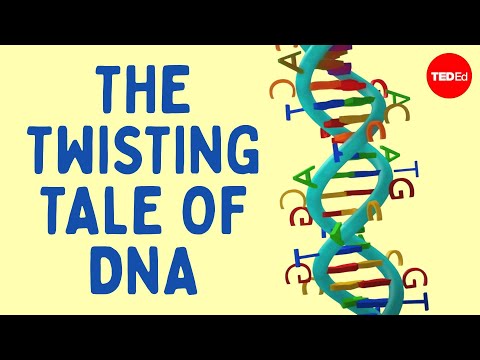
Each chromosome carries multiple lengths of DNA called genes. These genes are coding agents; their different sequences of base-pairs are codes that tell specific cells of the body to synthesise a particular protein. These proteins carry out the functions of the body.
Some examples are the genes that:
produce the pigment melanin that controls eye, hair and skin color [if this gene doesn't work at all, the condition called albinism results]
produce hormones eg insulin, which is made by the pancreas and allows your body to use sugar (glucose) from carbohydrates in the food that you eat for energy or to store glucose for future use (if this gene is defective, Type 1 diabetes is the result)
regulation of the chemical processes of the body eg amylase, the enzyme found in saliva that starts the digestion of carbohydrates
The study of how the genes are inherited, and how those genes are expressed is called genetics.
Our genes work in pairs (with a small number of exceptions involved with inheritance linked with sex ), one coming from each parent. Because the genetic information of two parents joins (not necessarily with equal mixing of traits), the offspring will be different from the parents. But why and how does what your genes code for (your genotype) become what is expressed in your body, observable traits (your phenotype)?
Note: people can pronounce these as jen-o-type or jean-o-type, and fen-o-type or fee-no-type. It is usually jen-o-type and for some reason, but any combination is fine.
View videos:
What are traits? https://learn.genetics.utah.edu/content/basics/traits/ [1.24 mins]
What are DNA and Genes? https://learn.genetics.utah.edu/content/basics/dna/ [1.13 mins]
2.1B. DNA
2.1B. DNA
ACTIVITY 2.1.1a
ACTIVITY 2.1.1a
Carry out activities 1-2 from the main menu for the link below.
You are NOT expected to know this at this point, you are exploring by doing.
TASK 2.1.1a
TASK 2.1.1a
This is the research, it is where you get the information you need for your notes.
Read Tx pp 2-16 (link takes you to Review, scroll back up to P2)
Read information box below
Click on link to left or below https://unlockinglifescode.org/media/animations/516#514

TASK 2.1.1b
TASK 2.1.1b
Complete Tx pp 17-18 Q 1, 2,4,5,7,9,10,11,12,16,18
View video: DNA, Chromosomes etc https://www.youtube.com/watch?v=8m6hHRlKwxY [8.17 mins]
Complete Worksheet (2 pages) https://canvas.roseville.nsw.edu.au/courses/23081/files?preview=1612325
This worksheet is linked on our Canvas Schedule page. Hopefully you can download it!!
 video_recap_of_dna_chromosomes_genes_proteins_by_amoeba_sisters_2018.pdf
View videos:
 10.4.2 . THE DOUBLE HELIX.PDF10.4.2 THE DOUBLE QUESTIONS.doc10.4.2 THE EDIBLE DOUBLE HELIX.DOC10.4.2 Building a model of DNA.doc
DNA Replication
DNA Replication
The DNA of chromosomes contains all the information needed for the cell to function and carry out its activities. It determines what an organism looks like.
During mitosis the DNA replicates itself exactly and each chromosome becomes double stranded. The double strands then separate and one strand goes into each of the new cells that are forming.
During mitosis, DNA is transferred from one cell to two new cells. The new cells that form will have exactly the same information as the original cell and will therefore be able to carry out exactly the same activities.
You started life as a single-celled zygote. This cell then divided by mitosis, this continued many times as you grew. Therefore because mitosis results in genetically identical cells, every cell in your body has exactly the same genetic information, the same DNA.
The advantage of this is that each cell in an organism’s body will have the correct information to function as that particular organism. Also when cells are repaired or replaced, the new cell will have the correct genetic information to enable it to carry out its particular function.
View video: https://www.youtube.com/watch?v=zzce8JbCDVI&feature=youtu.be [2.09 mins]
ACTIVITY 2.1.2
ACTIVITY 2.1.2
Carry out Activity 3 DNA Replication from the main menu for the link below. Don't go too fast in the matching activity, it doesn't like it!!
You are NOT expected to know this at this point, you are exploring by doing.
2.1C. Inheritance
2.1C. Inheritance
View video:
History of biological inheritance https://youtu.be/U5e2hg2uLco [4.05 mins]
Gregor Mendel Great Minds https://youtu.be/GTiOETaZg4w [10.54 mins]
View video:
What is Inheritance? https://learn.genetics.utah.edu/content/basics/inheritance/ [2.05 mins]
View video: https://youtu.be/Mehz7tCxjSE [10.54 mins]
View PPT:
Introduction to Genotype and Phenotype (66 slides)
10 WDWCF 2.1a Gen Phen Intro PPT1.pptxLiteracy moment: The image to the right is a pun. See if you can explain why this is. (If you have no idea, you may need to Google "give peace a chance".)

Click on link, make a copy and complete https://docs.google.com/presentation/d/1E4BR12uHW_bOfAHRs4rjDQ98ggAE8-Qxf4-stcvqz60/edit?usp=sharing
(or view right)

TASK 2.1.2
TASK 2.1.2
View video: Alleles and genes https://www.youtube.com/watch?v=pv3Kj0UjiLE [8.06 mins]
Complete Worksheet (2 pages)
video_recap_of_alleles_and_genes_by_amoeba_sisters.pdfTASK 2.1.3
TASK 2.1.3
View video: Monohybrids and the Punnett Square https://www.youtube.com/watch?v=i-0rSv6oxSY [6.27 mins]
Complete Worksheet (2 pages)
video_recap_of_mendelian_monohybrid_cross_by_amoeba_sisters.pdfTASK 2.1.4
TASK 2.1.4
Complete the worksheet at right (2 pages.)
Licence for other schools available from Amy Brown Science on Teachers Pay Teachers https://www.teacherspayteachers.com/Product/Genetics-Punnett-Square-Practice-Printable-and-Google-Apps-Distance-Learning-78842
Monohybrid Mice.pdfACTIVITY 2.1.3 Build a Dragon
ACTIVITY 2.1.3 Build a Dragon
YOU MAY NEED TO SET UP AN ACCOUNT.
2. Draw a simple copy of the Trait Tracker, or download a copy from Canvas. Use it to help you complete the missions.
3. Try to work out how the alleles interact by yourself, but hints are available by clicking below.
Geniventure Trait Tracker.docxTask 2.1.5
Task 2.1.5
Complete the worksheet at right (5 pages.) The genotype of the first question is done for you.
Return to the Powerpoint above if you need to refresh your grasp of the information.
For the last page (which is not the first part of a task in this PPT even if it says so) just try the first 10. If you are feeling very confident and like puzzles, you can go further. Towards the end you may find some where you need more information than you are given to find the solution
10 WDWCF 2.1a Gen and Phen WS.docxTASK 2.1.6
TASK 2.1.6
For the Harry Potter Genetics PPT at right (24 slides)
Work through the tutorial
Complete the problems
harry_potter_genetics.pdfTASK 2.1.7
TASK 2.1.7
1. Ref Text pages 20-23, complete:
Worksheet 1
Worksheet 2
Worksheet 3
TASK 2.1.8
TASK 2.1.8
Extra Problems:
10.4.3 Potato People Worksheet.pdf10.4.3 Genetic Problems Worksheet 3.pdf10.4.3 Genetic Problems Worksheet 2.pdf10.4.3 Genetic Problems Worksheet 1.pdfREVIEW 2.1.1
REVIEW 2.1.1
Complete Worksheet to the right (Pages 1 and 2.)
For page 2, write out the completed sentences (not cross them over).
10 WDWCF 1b DNA WS.pdfREVIEW 2.1.2
REVIEW 2.1.2
Complete Text pages 17,18 Questions 1,3,4,5,7,8,9,13,14,15,16,17,22,23,24
Complete Text page 26 Q3,4
REVIEW 2.1.3
REVIEW 2.1.3
View and interact with the PPT at right to review the work on genetics so far (29 slides.)
HP lesson1.pdfGoogle Sites
Report abuse